Paschimottanasana - Seated Forward Bend
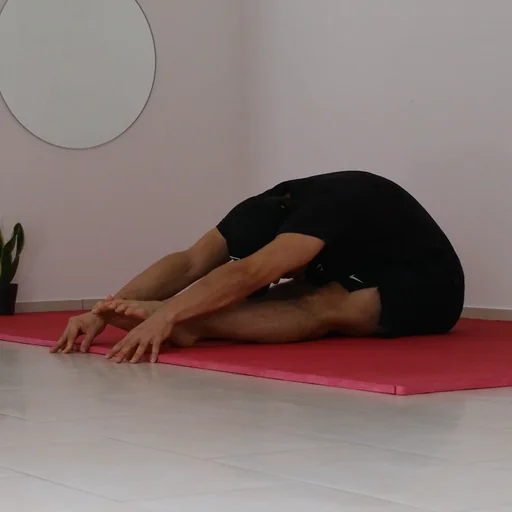
The seated forward bend, also known as Paschimottanasana, is a yoga exercise that stretches the back of the body, including the lower back and the back of the legs. You sit with your legs extended and bend your upper body forward to reach for your feet or legs.
Similarly, the Standing Forward Bend, also known as Jefferson Curls, involves letting the upper body hang down from a standing position to stretch the back of the body as well.
Another variation is the forward bend with spread legs, also known as Pancake, where the legs are spread to the sides to additionally stretch the inner thighs.
Paschimottanasana - Seated Forward Bend - the correct execution
- Start in the long seat
- Bend your hips and rest your upper body on your thighs
- Raise your arms overhead in extension of your torsoStretch your arms as far as possible towards your feet
Which muscles are trained by Paschimottanasana - Seated Forward Bend?


Build strength and muscle with a plan for your level.
Want to get stronger without putting every workout together yourself? The DIE RINGE app adapts exercises and progressions to your level and equipment. Open the app, start training and track your progress.
Train with DIE RINGEOver 1000 five-star reviews on App Store and Google Play.


Alternative variants of Paschimottanasana - Seated Forward Bend:
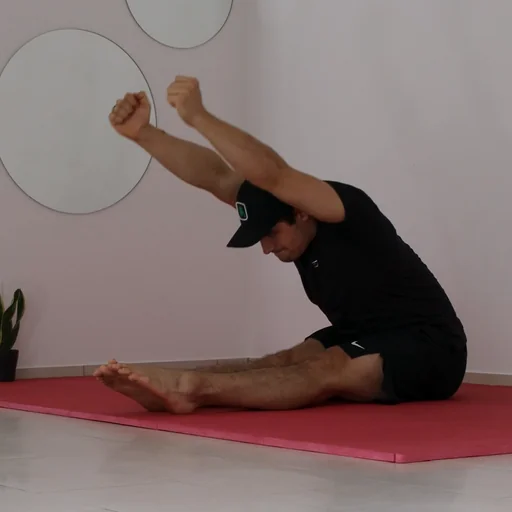
Dynamic Seated Forward Bend
The dynamic seated forward bend expands the classic version with smooth, controlled movements forward and backward. It enhances spinal mobility, improves active flexibility in the back of the legs, and simultaneously strengthens the muscles. The repeated movements also help to specifically increase the range of motion.
Dynamic Seated Forward Bend - the correct execution
- Start in the long seat
- Raise your arms overhead in extension of your torso
- Bend your hips and bring your hands toward your feet
- Your spine is upright and stable
- Pull back to the starting position
- Work in the greatest possible range
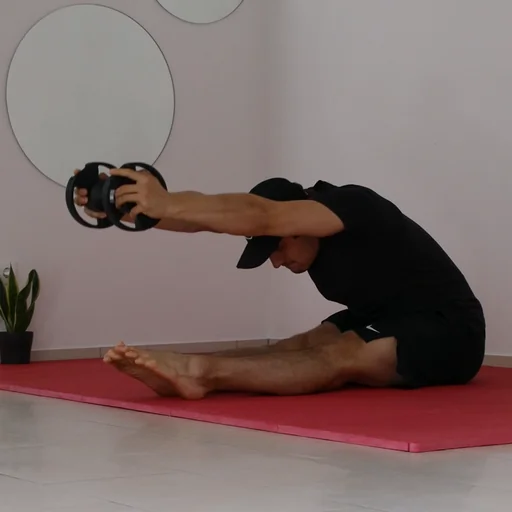
Weighted Seated Forward Bend
The seated forward bend with weight, also known as Paschimottanasana with added resistance, intensifies the classic version by using a dumbbell. This modification not only enhances flexibility but also challenges the stabilizing muscles in the lower back. The added weight requires a particularly controlled forward movement, increasing the focus on muscle strength and core stability.
Necessary equipment
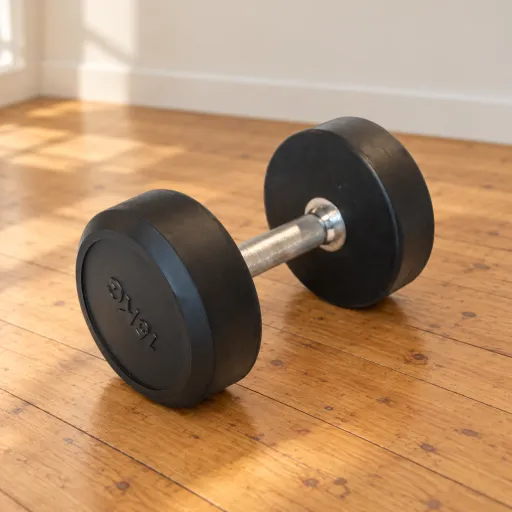
Weighted Seated Forward Bend - the correct execution
- Start in the long seat
- Hold a dumbbell with both arms above your head
- Beuge deine Hüfte und führe das Gewicht in Verlängerung des Oberkörpers Richtung FüßeBend your hips and bring the weight in extension of your torso towards your feet
- Your spine is upright and stable
- Pull back to the starting position
- Work in the greatest possible range
Similar exercises to Paschimottanasana - Seated Forward Bend
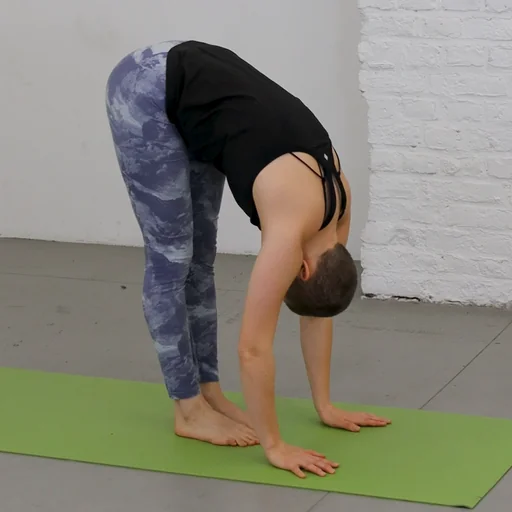
Jefferson Curls
Jefferson Curls are a dynamic exercise that stretches and strengthens the back muscles as well as the hamstrings. By slowly bending the upper body, this exercise improves flexibility and stability in the back. Other exercises that stretch the posterior chain include Good Mornings or the Elephant Walk.
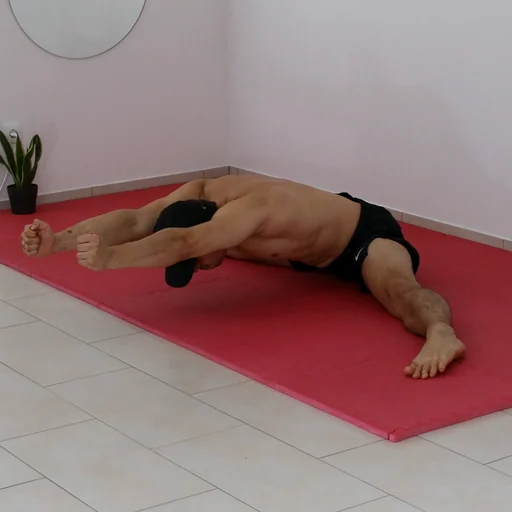
Pancake Stretch
The pancake stretch is a flexibility exercise that primarily enhances flexibility in the hips, groin area, inner thighs, and hamstrings. In this stretch, you sit on the floor with your legs spread apart and bend your upper body forward. The further you lean forward, the more intense the stretch becomes. The pancake stretch is a mobility prerequisite for the Press Handstand and a preparatory exercise for the Splits.
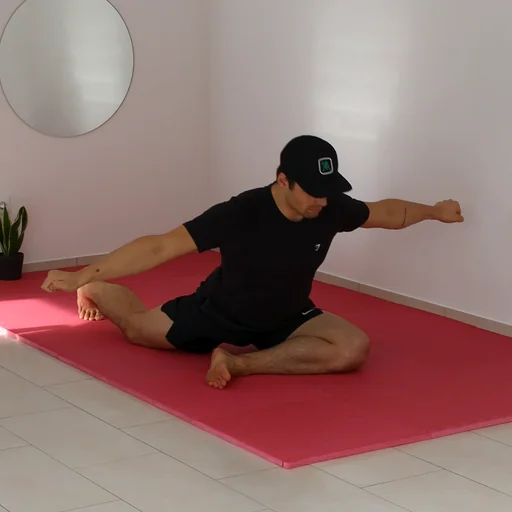
Pigeon Pose Good Mornings
Pigeon Pose Good Mornings combine the hip stretch of the Pigeon Stretch with the forward bend of traditional Good Mornings. This exercise improves hip mobility while simultaneously strengthening the lower back and glutes. The upright posture and controlled forward bend specifically target hip flexibility and core stability.
Pigeon Pose Good Mornings are an advanced variation of classic Good Mornings and an extremely effective mobility exercise. They allow for active engagement with load through the full range of motion, optimizing both mobility and stability.