Banded Pull Ups
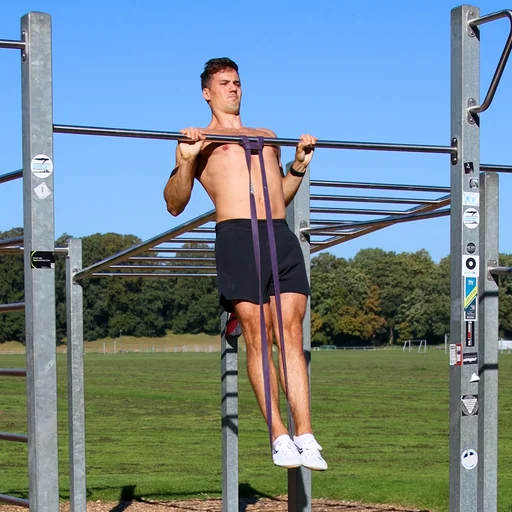
Band-assisted pull-ups make traditional pull-up training easier by providing support through a resistance band. This exercise is particularly suitable for beginners or individuals looking to build upper body strength before being able to perform unassisted pull-ups. It primarily targets the back and arms. Compared to regular overhand-grip pull-ups, the intensity is reduced, allowing for a focus on proper form. This variation also helps in progressively learning pull-ups, similar to how negative pull-ups serve as a stepping stone to completing full pull-ups.
Necessary equipment
Banded Pull Ups - the correct execution
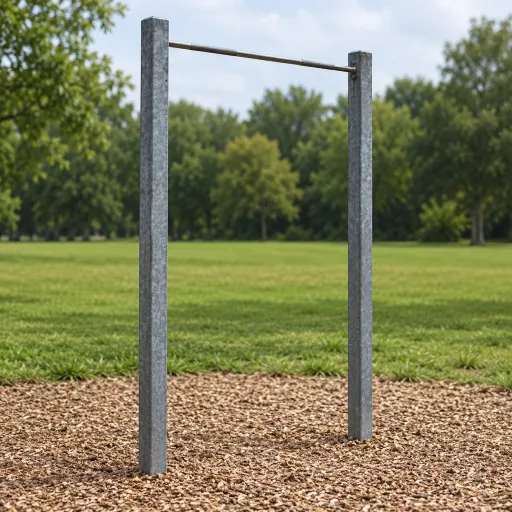
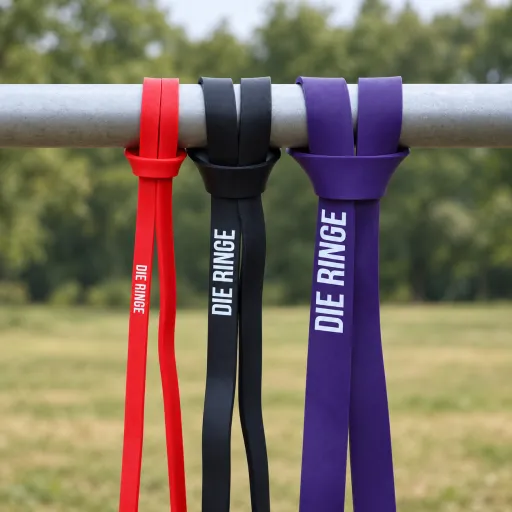
- Secure the purple heavy-resistance band to the pull-up bar with a loop
- Grip the bar at least shoulder-width apart with an overhand grip, backs of your hands facing you
- Place one foot in the band loop and start in a hang with your arms straight
- Pull your shoulder blades back and down
- Bend your arms and use the band’s assistance to pull yourself up until your chest touches the bar
- Briefly hold the top position
- Lower yourself slowly and with control back into a hang with your arms straight
Which muscles are trained by Banded Pull Ups?


Primary trained muscles for Banded Pull Ups
Latissimus - The latissimus dorsi is a large muscle in your back that helps you pull your arm down and back. It also supports breathing and stabilizes the spine.
Upper Back - The muscles in the upper back, including the trapezius and rhomboid muscles, help move and stabilize your shoulders. They pull the shoulder blades together and support posture.
Biceps - The biceps brachii muscle is located on the front of your upper arm. It helps you bend your arm at the elbow, rotate your palm upwards, and lift your arm forward.
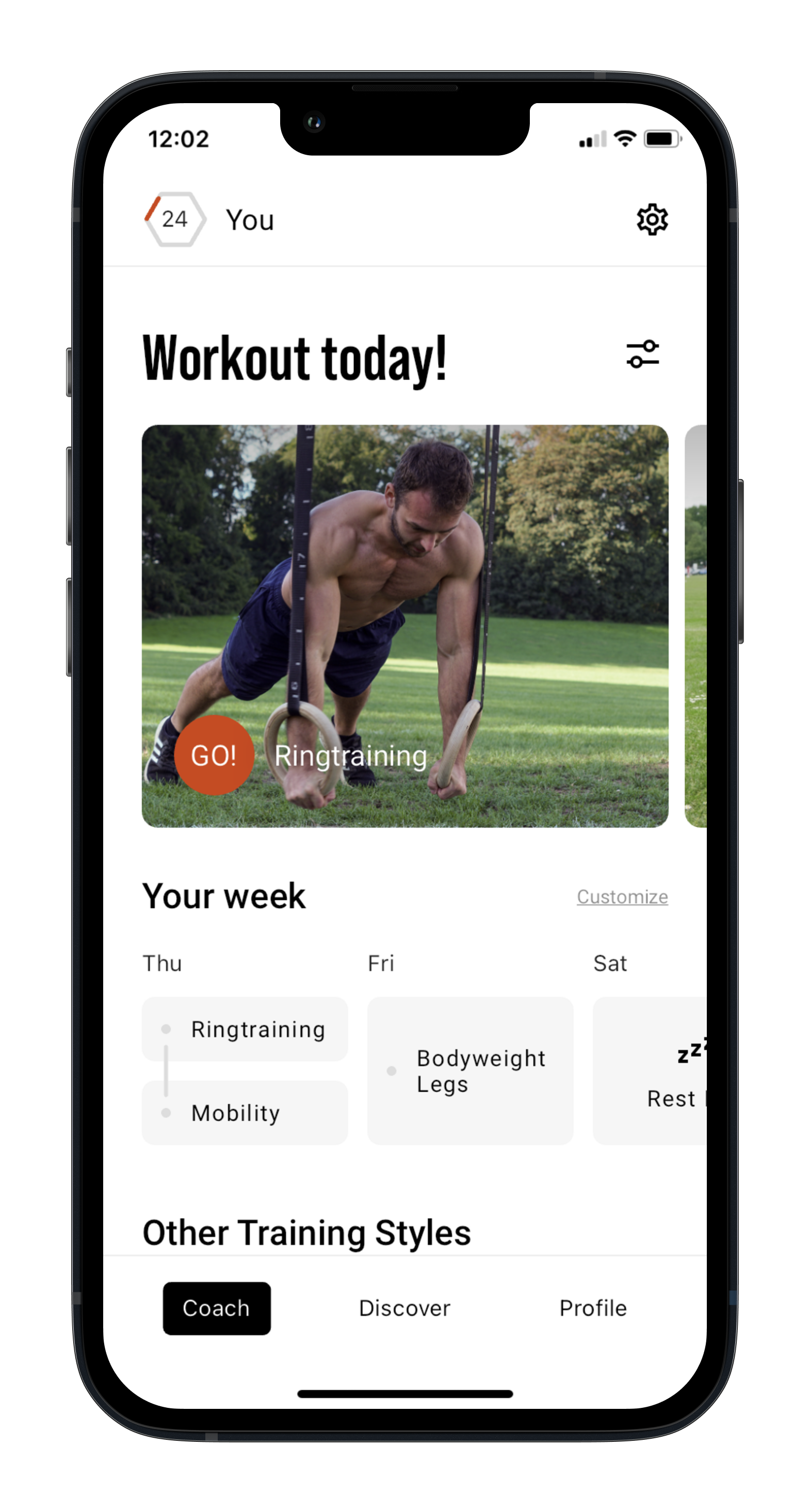
Build strength for your pull-ups.
Working toward your first pull-up or more controlled reps? The DIE RINGE app shows you which exercise to train next and adapts your training to your level and equipment.
Train with DIE RINGEOver 1000 five-star reviews on App Store and Google Play.