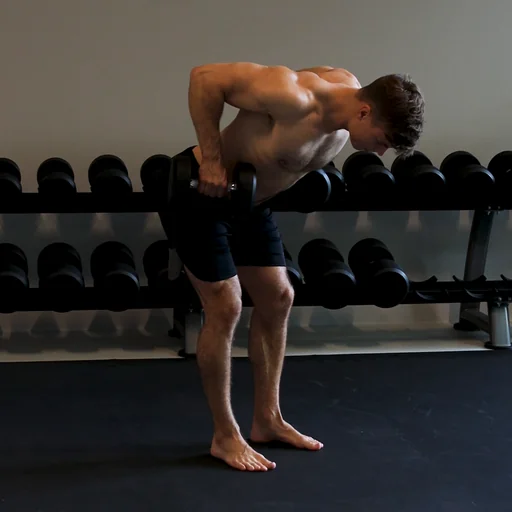
Bent Over Rows with dumbbells
The Bent Over Row with dumbbells is an effective exercise for the upper back. The upper body is leaned forward while the dumbbells are pulled up in a controlled manner, bringing the shoulder blades together. It is important to keep the back straight and perform the movement slowly. This exercise can also be done with a barbell.
Necessary equipment
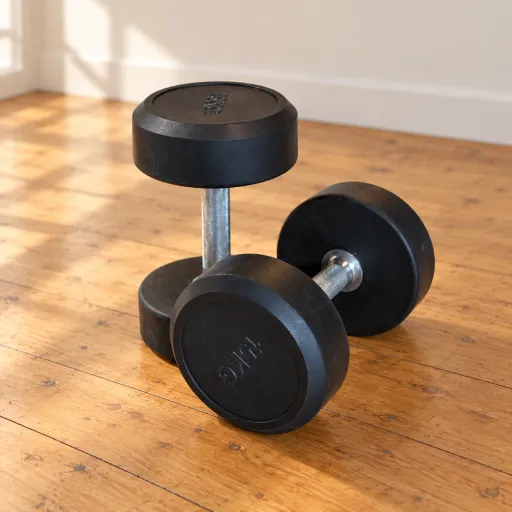
Bent Over Rows with dumbbells - the correct execution
- Start in hip-width stance
- Bend your hips until your upper body is horizontal to the floor
- Make sure your spine is straight
- Knees are slightly bent
- Grab the dumbbells with arms extended
- Pull the dumbbells next to your abs
- Work in the greatest possible range of motion
- During the repetitions make sure that you stay in the bent forward position.
- The training weight for this exercise is the weight of a single dumbbell. Therefore, train with two dumbbells that weigh the indicated weight
Which muscles are trained by Bent Over Rows with dumbbells?


Primary trained muscles for Bent Over Rows with dumbbells
Rear Delts - The rear part of the deltoid muscle, also known as the posterior shoulder, is located at the back of the shoulder. It is responsible for the backward movement of the arm as well as external rotation. This muscle is particularly engaged during activities like rowing or pulling the arm back. The rear shoulder supports posture and helps pull the shoulder blades back, contributing to shoulder stabilization.
Upper Back - The muscles in the upper back, including the trapezius and rhomboid muscles, help move and stabilize your shoulders. They pull the shoulder blades together and support posture.
Latissimus - The latissimus dorsi is a large muscle in your back that helps you pull your arm down and back. It also supports breathing and stabilizes the spine.
Neck - The neck muscles move your head in all directions and support important structures such as blood vessels and nerves that run between your head and chest.
Biceps - The biceps brachii muscle is located on the front of your upper arm. It helps you bend your arm at the elbow, rotate your palm upwards, and lift your arm forward.
Build a stronger back.
How hard should your rows be, and how do they fit into your training? The DIE RINGE app sets exercises and reps for your level. Open the app and know what to train today.
Train with DIE RINGEOver 1000 five-star reviews on App Store and Google Play.


Similar exercises to Bent Over Rows with dumbbells
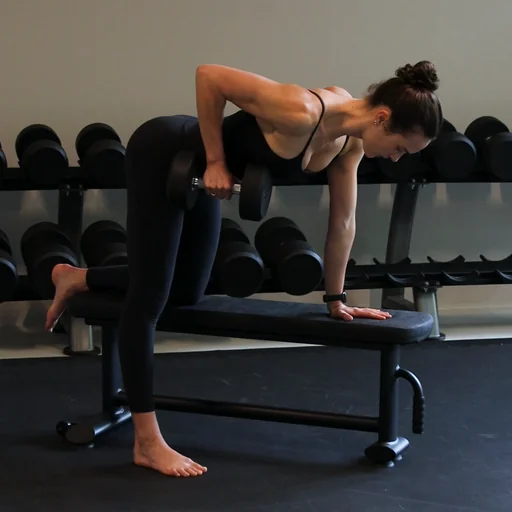
One Arm Row with dumbbells
One-arm dumbbell rows are among the most effective back exercises in bodybuilding. Compared to one-arm rows with gymnastics rings, this variation has the advantage of allowing the use of lighter weights, making it suitable for beginners as well.
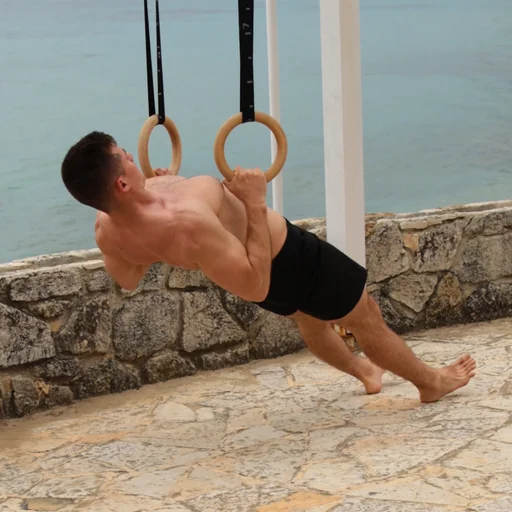
Ring Rows
Rowing on gymnastics rings is an effective calisthenics exercise that strengthens the back, rear shoulders, and arms. Using your body weight as resistance, you pull yourself up on the rings, which also enhances your core stability. Compared to dumbbell rows or barbell rows, where the movement is more isolated, rowing on the rings requires more overall body tension. This exercise is ideal for building functional strength and specifically targeting the core muscles. It fits perfectly into a classic calisthenics routine and prepares you for more intense exercises, such as ring pull-ups or ring muscle-ups. Thanks to the freedom of movement provided by the rings, other variations like hinge row, row to the stomach, and row to the forehead are possible, allowing for more focused training of different regions of the back.
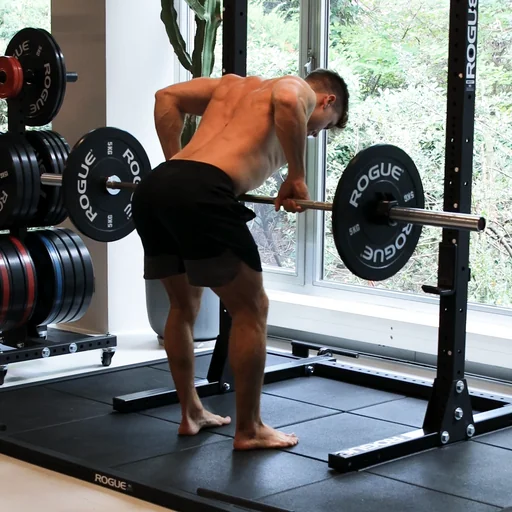
Bent Over Rows with a Barbell
The bent-over row with a barbell is a fundamental exercise for the upper back, latissimus, and rear shoulder muscles. The upper body is leaned forward while the barbell is pulled in a controlled manner toward the lower abdominal area. This exercise can also be done with dumbbells.