Dragon Flag Raises
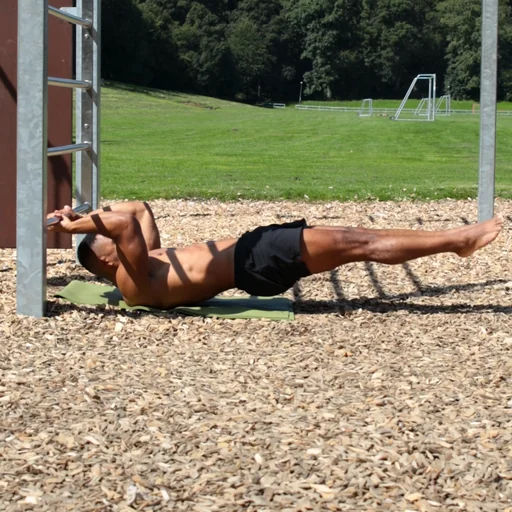
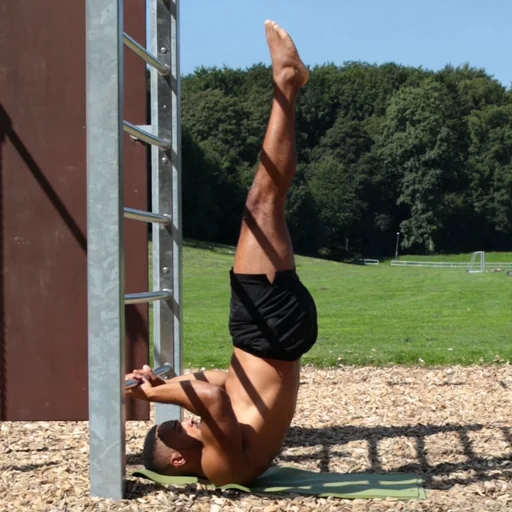
Dragon Flag Raises are an advanced core exercise where the body is kept straight and lifted and lowered in a controlled manner, with only the upper back touching the ground. This movement requires extremely strong core muscles and a high level of body control.
Necessary equipment
Dragon Flag Raises - the correct execution
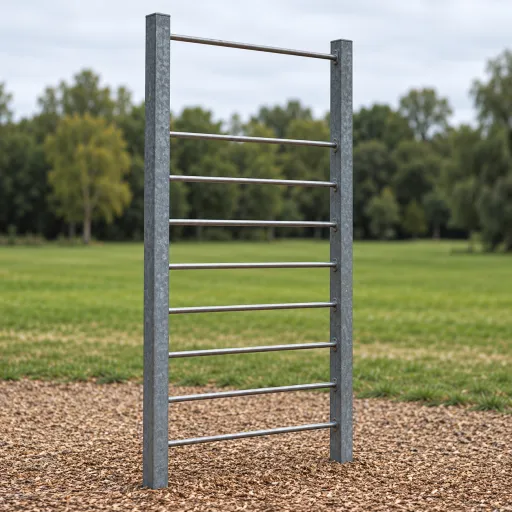
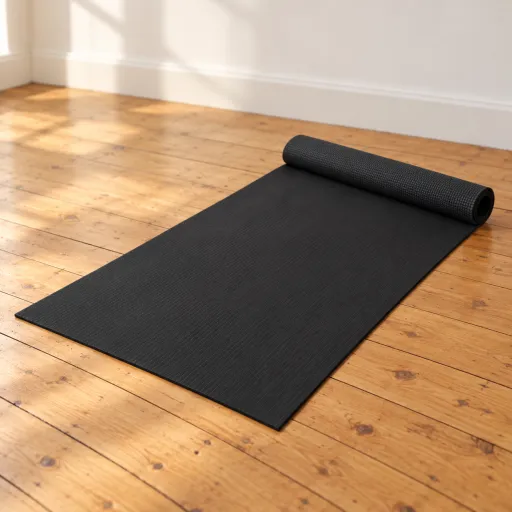
- Lie with your back on a mat or the floor so that your head is positioned close to the wall bars
- With both arms bent, grab one bar above your head, shoulder width apart.
- Activate your core and glutes while keeping your hips extended
- Firmly tighten the abdominal muscles and press the lower back into the floor (PPT)
- Lift your body so that only your upper back and shoulder blades touch the floor
- Raise your body until your legs are parallel to the wall bars
- Keep your body straight and in line
- Lower yourself slowly and controlled back towards the floor
Which muscles are trained by Dragon Flag Raises?


Primary trained muscles for Dragon Flag Raises
Abs - The rectus abdominis, also known as the "abs," runs vertically along the front of the abdomen. It is responsible for bending the torso forward, such as during sit-ups, and lifting the pelvis. This muscle stabilizes the torso, supports the spine, and helps maintain good posture.
Triceps - The triceps brachii muscle is located at the back of your upper arm. It extends your arm at the elbow and also helps move the arm backward.
Secondary trained muscles for Dragon Flag Raises
Latissimus - The latissimus dorsi is a large muscle in your back that helps you pull your arm down and back. It also supports breathing and stabilizes the spine.
Build strength and muscle with a plan for your level.
Want to get stronger without putting every workout together yourself? The DIE RINGE app adapts exercises and progressions to your level and equipment. Open the app, start training and track your progress.
Train with DIE RINGEOver 1000 five-star reviews on App Store and Google Play.


Alternative variants of Dragon Flag Raises:
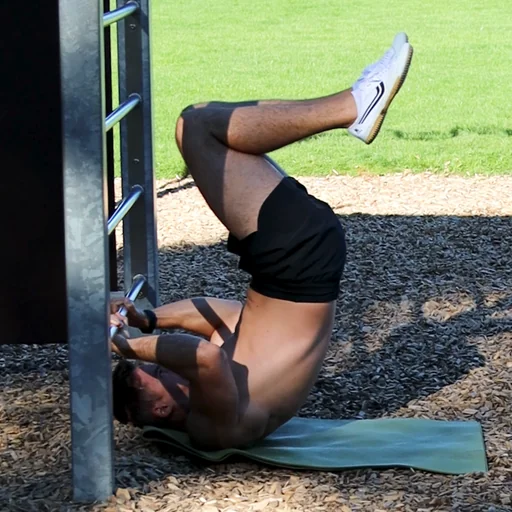
Tuck Dragon Flag Raises
Compared to Dragon Flag Raises, Tuck Dragon Flag Raises reduce the leverage by bringing the knees toward the chest. This variation lowers the intensity, providing some relief to the core muscles.
Necessary equipment
Tuck Dragon Flag Raises - the correct execution
- Lie with your back on a mat or the floor so that your head is positioned close to the wall bars
- With both arms bent, grab one bar above your head, shoulder width apart.
- Bend your hips 45 degrees
- Tighten your abdominal muscles and press your lower back into the floor (PPT)
- Lift your body so that only your upper back and shoulder blades touch the floor
- Raise your body until your knees touch the wall bars
- Lower yourself slowly and controlled back towards the floor
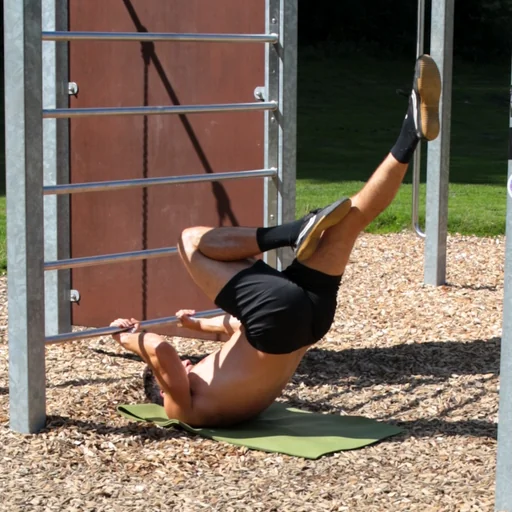
One Leg Dragon Flag Raises
The single-leg variation of Dragon Flag Raises is more challenging than Tuck Dragon Flag Raises because one leg remains extended. This increases the leverage and requires more core strength, placing greater demand on the abdominal muscles.
Necessary equipment
One Leg Dragon Flag Raises - the correct execution
- Lie with your back on a mat or the floor so that your head is positioned close to the wall bars
- With both arms bent, grab one bar above your head, shoulder width apart.
- Activate your core and glutes while keeping your hips extended
- Firmly tighten the abdominal muscles and press the lower back into the floor (PPT)
- Pull the right knee to the chest
- Lift your body so that only your upper back and shoulder blades touch the floor
- Raise your body until your legs are parallel to the wall bars
- Lower yourself slowly and controlled back towards the floor