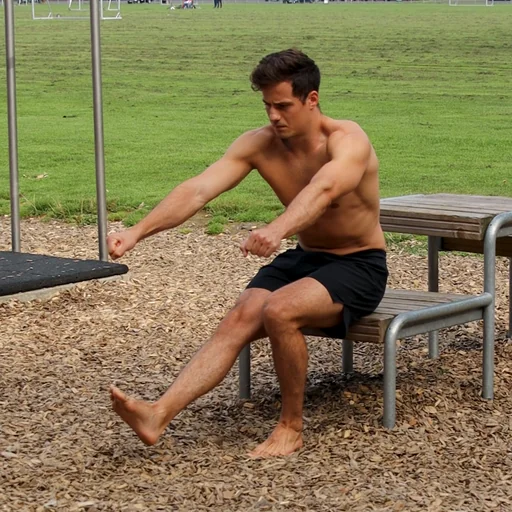
Pistol Squat To Box
Pistol Squats to Box, or Sit Downs, are a progression exercise of the Pistol Squat, aimed at strengthening the leg muscles, especially the quadriceps and glutes. In this exercise, a one-legged squat is performed in front of a box or bench, allowing you to sit down at mid-height. The raised surface reduces the range of motion, making the exercise easier for beginners.
Other progression exercises for the Pistol Squat with similar intensity include Assisted One-Legged Squats and Negative One-Legged Squats.
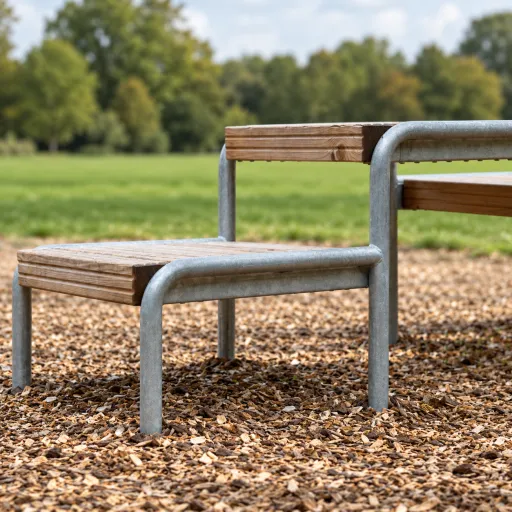
Necessary equipment
Pistol Squat To Box - the correct execution
- Stand upright with your feet hip-width apart directly in front of a box
- Shift your weight onto your left leg and lift your right leg off the floor
- Keep your arms in front of you to help balance and shift your body's center of gravity forward
- Bend your left knee and sit on the box in a controlled manner
- Your heel should remain on the ground throughout
- Extend your right leg forward so that your foot does not touch the floor
- Keep your chest upright and your back as straight as possible
- Make sure that you tend to push your bent knee outwards to stabilize it
- Sit on the box for a short moment
- Powerfully push yourself upwards with your left leg back to the standing position
Which muscles are trained by Pistol Squat To Box?


Primary trained muscles for Pistol Squat To Box
Glutes - The gluteus maximus is the large muscle in your buttocks. It is important for extending the hip, moving your leg backward, and stabilizing the hip joint.
Hipflexors - The hip flexors, including the iliacus and psoas major muscles, allow you to bend your leg and torso forward.
Secondary trained muscles for Pistol Squat To Box
Adductors - The adductors are muscle groups in the thigh that help bring your legs together. They stabilize your pelvis while walking and standing and also assist in movements like crossing your legs.
Quadriceps - The quadriceps femoris is the large muscle at the front of your thigh. It extends your knee.
Build stronger legs.
Want a leg workout without planning every session yourself? The DIE RINGE app chooses exercises for your level and equipment. Know what to train each session and keep track of your progress.
Train with DIE RINGEOver 1000 five-star reviews on App Store and Google Play.


Similar exercises to Pistol Squat To Box
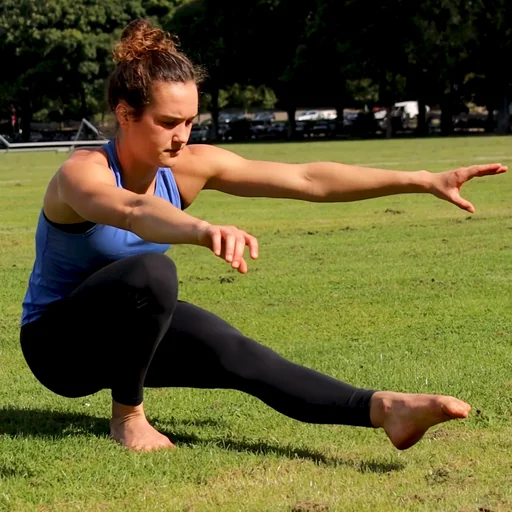
Pistol Squats
The pistol squat is a challenging single-leg squat where you lower yourself deep into a squat while keeping the other leg extended forward. This exercise requires not only strength but also good balance and flexibility. It particularly targets the thighs, glutes, and core muscles. Those who want to work their way up to pistol squats can start with supportive exercises like the Bulgarian split squat or deep squat with weight to build the necessary strength and flexibility. Progressions of the pistol squat, which are explained further below, are also useful for learning the movement. Even more complex is the so-called dragon squat, where the free leg is crossed behind the standing leg as you lower into the squat.
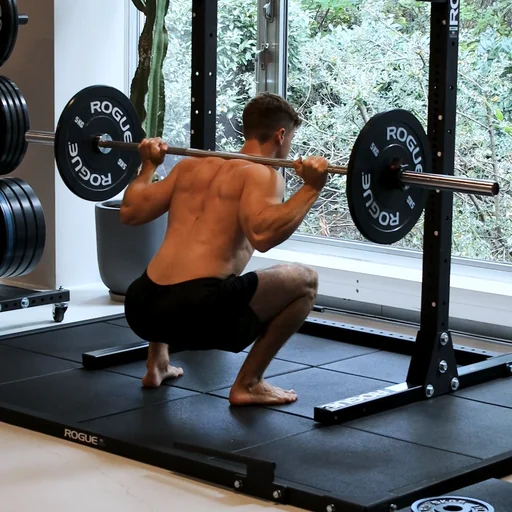
Barbell Back Squats
Back squats are one of the fundamental exercises in strength training. They are typically performed with a barbell, allowing for progressive overload. Back squats primarily target the thigh muscles, particularly the quadriceps and glutes. Additionally, they strengthen the core and lower back, as these muscles are crucial for stability and control during the exercise.
Back squats are among the most well-known foundational exercises in strength training, as they promote overall body strength and stability, improve functional movements in daily life, and, when combined with other strength exercises like deadlifts or lunges, provide an excellent foundation for leg training.
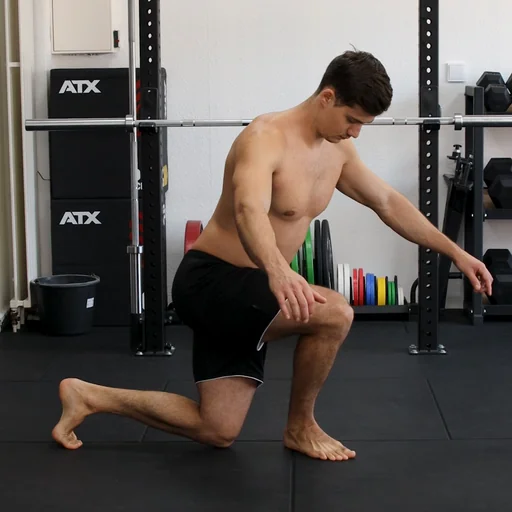
Curtsey Lunges
Curtsey lunges are a variation of the classic lunge, where the back leg is crossed behind the body. This movement particularly targets the outer thighs and glutes, especially the side glute muscles. The crossing motion also promotes knee joint stability and improves coordination. Compared to the normal lunge, curtsey lunges work the side muscle groups more intensively, making them an effective exercise for balanced leg training.