Quadruped Stand, All Fours Position
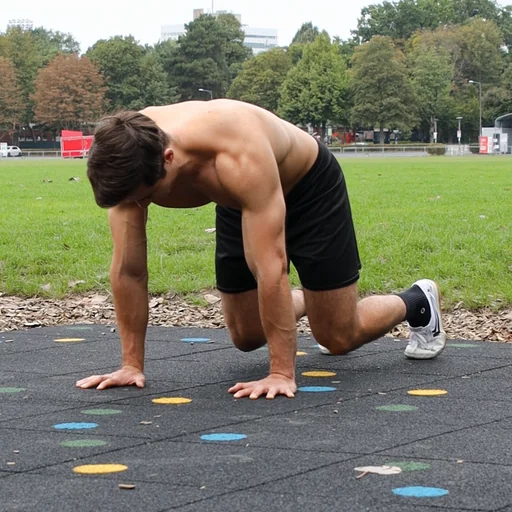
The Quadruped Stand, also called the All Fours Position, strengthens your shoulder and belly muscles. It’s a great beginner exercise and an easy way to start bodyweight training. When done correctly, the Quadruped Stand is just as good for your core as the Plank. It helps you stay stable, improves your posture, and you can make it harder by lifting one arm or one leg.
Quadruped Stand, All Fours Position - the correct execution
- Start in quadruped position
- Hands and feet are shoulder width apart
- Hands and feet are shoulder width apart
- Your upper body is parallel to the floor
- Keep tension in the torso
Which muscles are trained by Quadruped Stand for Beginners?


Primary trained muscles for Quadruped Stand for Beginners
Triceps - The triceps brachii muscle is located at the back of your upper arm. It extends your arm at the elbow and also helps move the arm backward.
Front Delts - The front part of the deltoid muscle, also known as the anterior shoulder, is located at the front of the shoulder. It is primarily involved in the forward movement of the arm, such as lifting the arm forward. It also assists in the internal rotation of the arm. This muscle is engaged in activities that involve lifting objects in front of the body or pushing forward.
Serratus Anterior - The serratus anterior muscle, also known as the anterior serratus muscle, is a muscle that runs along the sides of the ribs and attaches to the inside of the shoulder blade. It helps move the shoulder blade forward and outward and fix it against the chest wall. This is particularly important for movements such as bringing the arm forward or lifting the arm overhead. The serratus anterior muscle also plays a crucial role in stabilizing the shoulder during pushing or striking actions.
Abs - The rectus abdominis, also known as the "abs," runs vertically along the front of the abdomen. It is responsible for bending the torso forward, such as during sit-ups, and lifting the pelvis. This muscle stabilizes the torso, supports the spine, and helps maintain good posture.
Build strength and muscle with a plan for your level.
Want to get stronger without putting every workout together yourself? The DIE RINGE app adapts exercises and progressions to your level and equipment. Open the app, start training and track your progress.
Train with DIE RINGEOver 1000 five-star reviews on App Store and Google Play.


Alternative variants of Quadruped Stand, All Fours Position:
Quadruped Stand for Intermediate
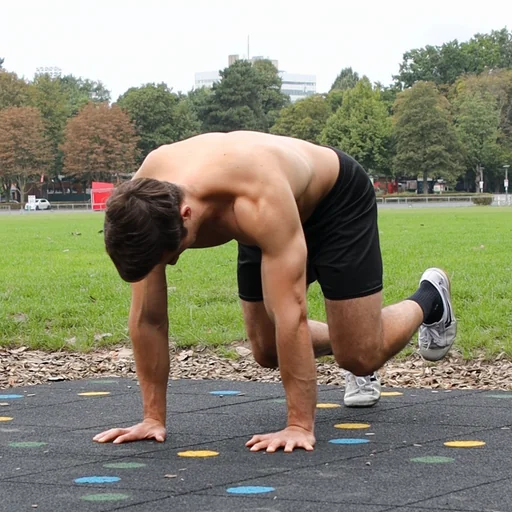
In the advanced version of the Quadruped Stand for Intermediate, you lift one arm or one leg at a time. This makes the exercise harder because your core muscles have to work more to stop your body from twisting. That’s why it’s called an anti-rotation exercise – just like the Renegade Row. This kind of training helps you build a strong, stable body and a powerful core.
Quadruped Stand for Intermediate - the correct execution
- Start in quadruped position
- Start in quadruped position
- Lift your knees off the floor
- Your upper body is parallel to the floor
- Lift one foot off the floor alternately
- Make sure your hips do not move with maximum torso tension
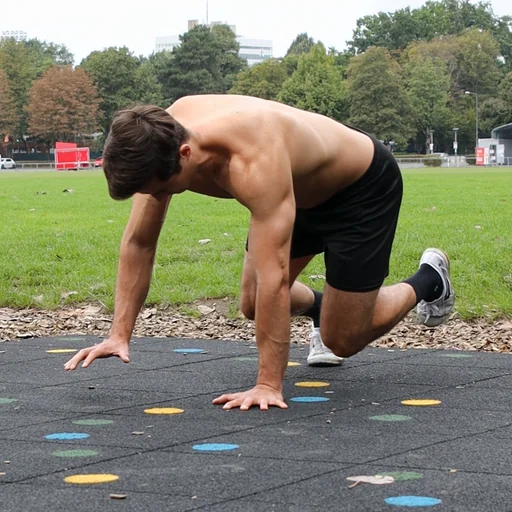
Quadruped Stand for Experts
In the expert version of the Quadruped Stand for Experts, you lift one arm and the opposite leg at the same time. This makes the exercise even harder because your core has to work even more to stop your body from twisting. It not only makes you more stable, but also improves your coordination and balance.
Quadruped Stand for Experts - the correct execution
- Start in quadruped position
- Hands and feet are shoulder width apart
- Lift knees off the floor
- Your upper body is parallel to the floor
- Alternately lift the opposite hand and foot off the floor
- With maximum torso tension, make sure your upper body moves as little as possible
Similar exercises to Quadruped Stand for Beginners
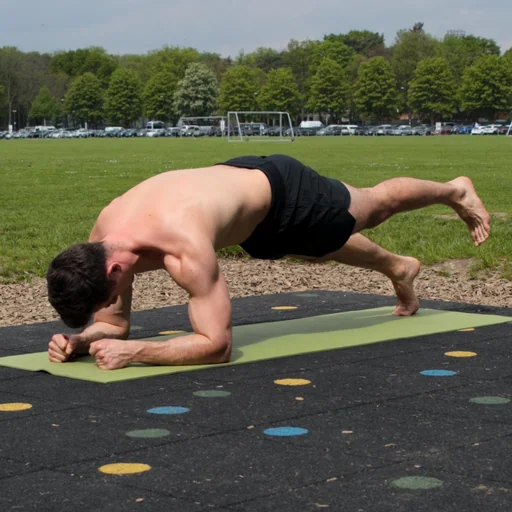
Plank Leg Lifts
Plank leg lifts combine the core stability of the classic plank with a dynamic leg lift, which engages not only the abs and back muscles but also the glutes and leg muscles more intensively. By alternating leg lifts, balance is challenged, and the core is activated more deeply. Compared to the forearm plank, this variation involves the lower body more, making the exercise more challenging and versatile.
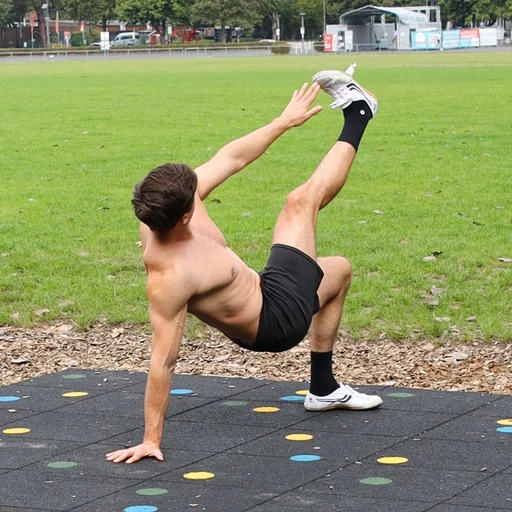
Break Dancer Exercise
The breakdancer exercise is a dynamic movement that effectively trains your core muscles as well as your shoulders and upper back. It simultaneously improves stability, coordination, and flexibility by challenging you with controlled rotations. This exercise is ideal for adding variety and intensity to your workout.
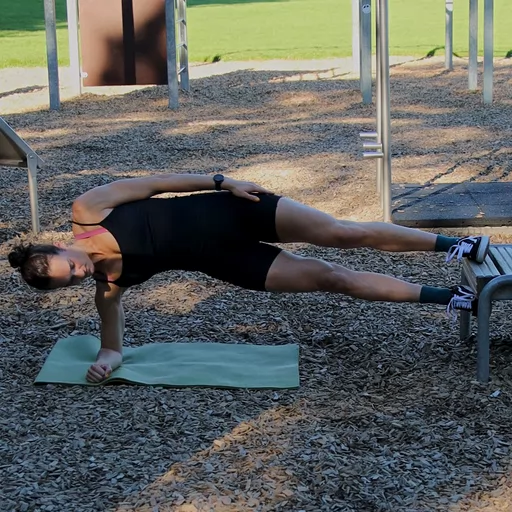
Copenhagen Plank
The Copenhagen plank is an exercise where you support yourself on one forearm while placing one leg on an elevated surface, such as a bench. It primarily strengthens the core muscles and the adductors, while also promoting hip stability. This exercise is particularly popular in rehabilitation sports and sports involving quick changes of direction.
A similar exercise is the side plank, which also strengthens the core muscles but targets the abductors instead of the adductors.