Ring Muscle Up
Ring Muscle-Ups are one of the most challenging exercises in Calisthenics and offer a special challenge that goes far beyond the classic Pull-Ups. This complex movement not only requires tremendous strength in the latissimus dorsi, biceps, and trapezius but also perfect coordination and body control. Due to the instability of the gymnastic rings, the entire stabilizing musculature is also intensely activated.
The Ring Muscle-Up is a combination exercise consisting of a Pull-Up on the rings, the Transition, and a Ring Dip.
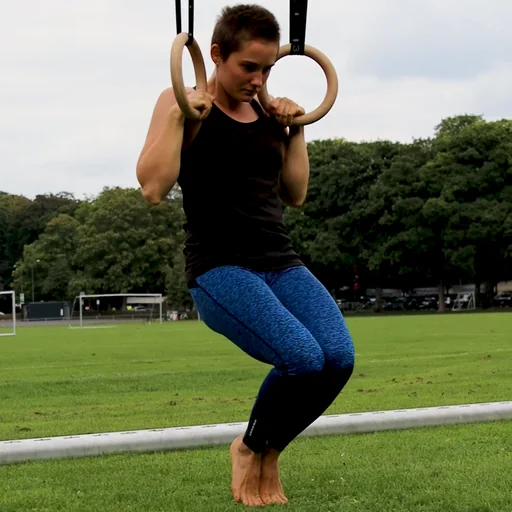
An ideal preparatory exercise to learn the Transition is False Grip Rowing with transition. This exercise helps you learn the False Grip, the necessary grip to transition from a hanging position to the support hold.
Necessary equipment
Ring Muscle Up - the correct execution
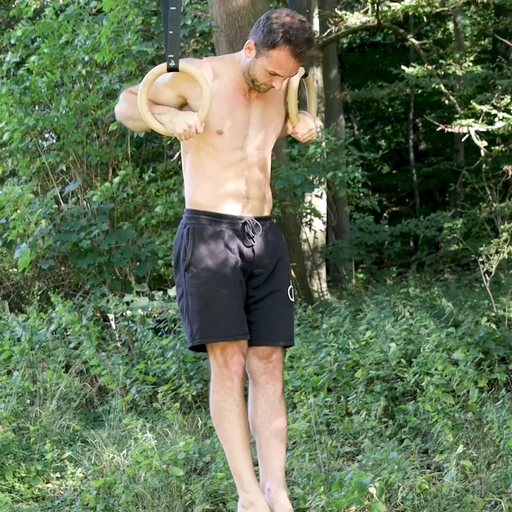
- Grap the rings with a false grip, where the wrists rest on the rings
- Start in a hanging position with your arms straight
- Powerfully pull the rings to your chest while leaning your body forward onto the rings
- Lift your elbows up and pull yourself into the deep dip position
- Keep the rings close to your body throughout the entire movement
- Press up powerfully into the top support position
- Keep your core tight and stable to ensure a clean execution of the movement
- Lower your body slowly and controlled back to the hanging starting position, without losing control
Which muscles are trained by Ring Muscle Up?


Primary trained muscles for Ring Muscle Up
Triceps - The triceps brachii muscle is located at the back of your upper arm. It extends your arm at the elbow and also helps move the arm backward.
Upper Back - The muscles in the upper back, including the trapezius and rhomboid muscles, help move and stabilize your shoulders. They pull the shoulder blades together and support posture.
Biceps - The biceps brachii muscle is located on the front of your upper arm. It helps you bend your arm at the elbow, rotate your palm upwards, and lift your arm forward.
Front Delts - The front part of the deltoid muscle, also known as the anterior shoulder, is located at the front of the shoulder. It is primarily involved in the forward movement of the arm, such as lifting the arm forward. It also assists in the internal rotation of the arm. This muscle is engaged in activities that involve lifting objects in front of the body or pushing forward.
Secondary trained muscles for Ring Muscle Up
Latissimus - The latissimus dorsi is a large muscle in your back that helps you pull your arm down and back. It also supports breathing and stabilizes the spine.
Common mistakes to watch for
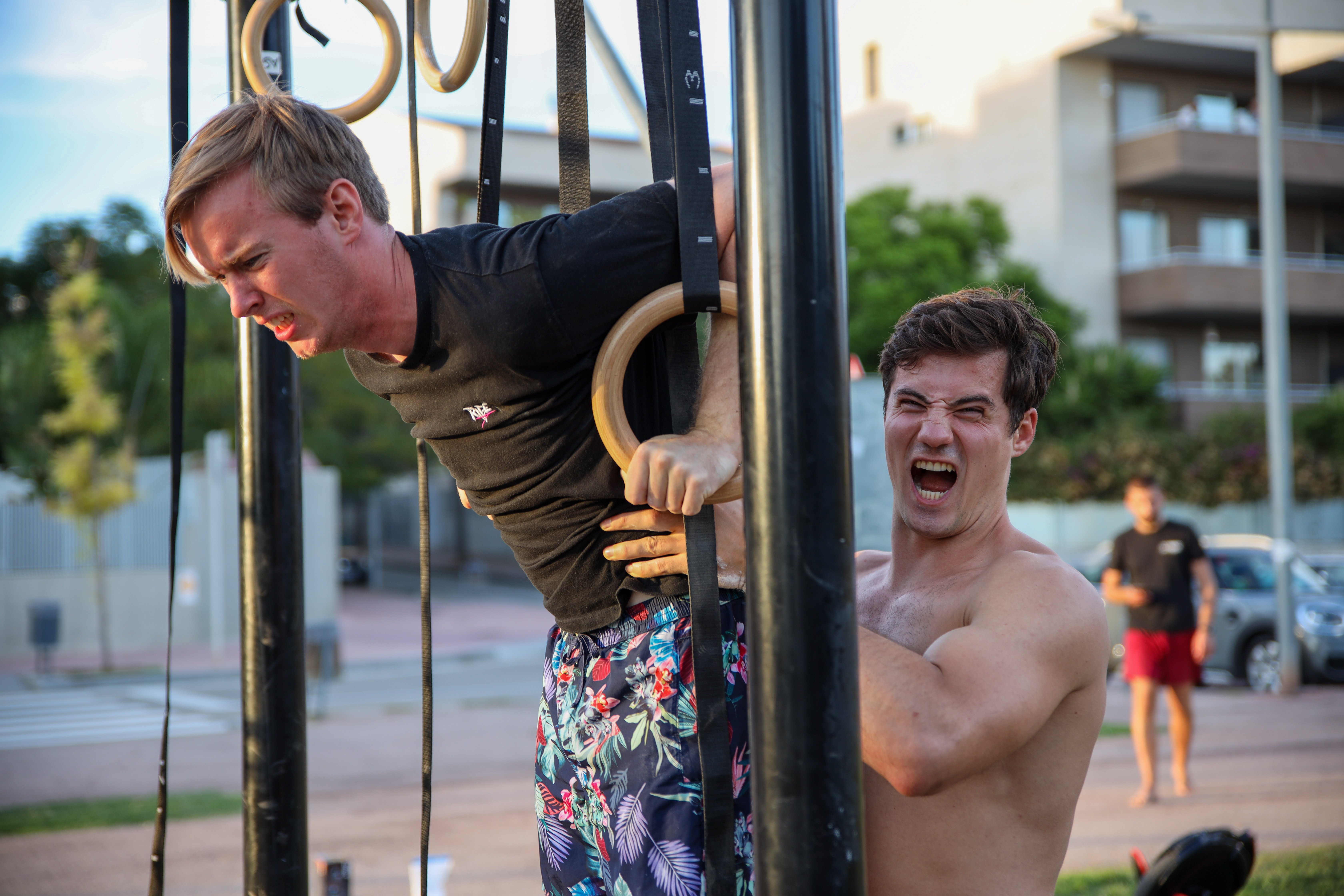
Avoid rushing the transition with one arm moving over its ring far ahead of the other. Keep the rings close and practise the transition with control.
Choose the right difficulty
Train the pull, transition and dip separately when needed. A controlled ring pull-up and a stable dip help you assess the individual parts.
Related exercise to work on: Ring Dips
Put the exercise into your training
Choose a few high-quality attempts with enough rest between them. When the transition loses control, continue with the separate movement phases.
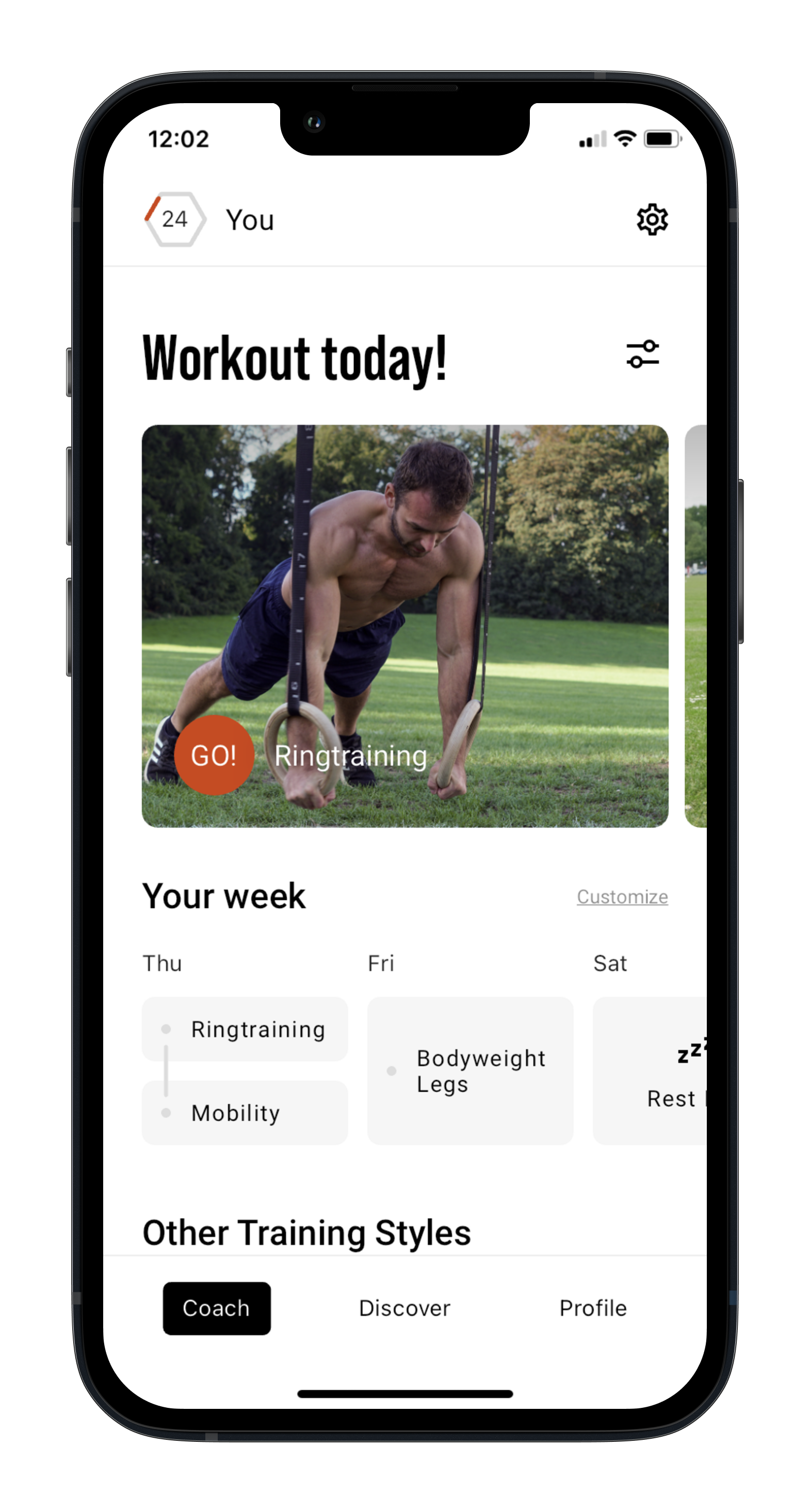
Work toward your muscle-up step by step.
From the pull-up through the transition to the dip, the DIE RINGE app puts suitable preparatory exercises in a useful sequence and adapts them to your level. Train with a plan for your goal.
Train with DIE RINGEOver 1000 five-star reviews on App Store and Google Play.