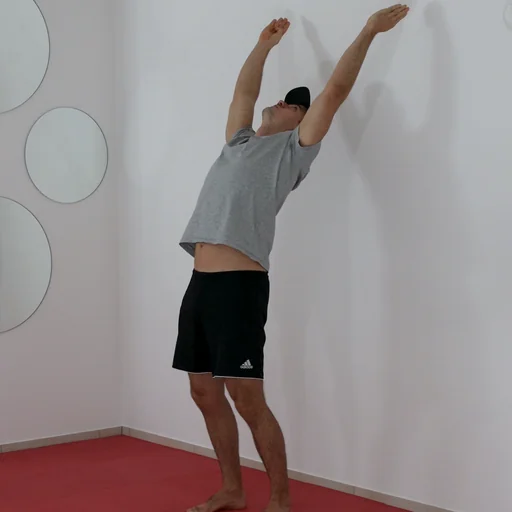
Standing Backbend
The Standing Backbend, known as the "Backbend" and as "Anuvittasana" in yoga, is an exercise where the upper body is bent backward. It is an essential part of yoga practice, as it enhances spinal mobility and strength, improves posture, and provides numerous physical and mental benefits.
Backbends stretch the chest and abdominal muscles, strengthen the back muscles, and stimulate key areas in yoga, such as the respiratory muscles and digestive system. When performed correctly, they can alleviate back pain, deepen breathing, and improve the flow of energy throughout the body. Myths like "backbends worsen a swayback" or "are unsuitable for older adults" are false. Backbends are accessible to everyone and highly beneficial.
A more advanced variation of backbends is the bridge, which many recognize from gymnastics. With mindfulness and patience, you can gradually work toward this more intense exercise to increase flexibility and strength over time.
Standing Backbend - the correct execution
- Start standing with your back to the wall
- Have 1-2 foot lengths distance to the wall
- Raise your arms overhead in extension of the torso
- Go into a backbend until your hands touch the wall
Which muscles are trained by Standing Backbend?


Secondary trained muscles for Standing Backbend
Upper Back - The muscles in the upper back, including the trapezius and rhomboid muscles, help move and stabilize your shoulders. They pull the shoulder blades together and support posture.
Lower Back - The erector spinae muscle runs along your spine and helps you extend your back and stand upright.
Build strength and muscle with a plan for your level.
Want to get stronger without putting every workout together yourself? The DIE RINGE app adapts exercises and progressions to your level and equipment. Open the app, start training and track your progress.
Train with DIE RINGEOver 1000 five-star reviews on App Store and Google Play.


Similar exercises to Standing Backbend
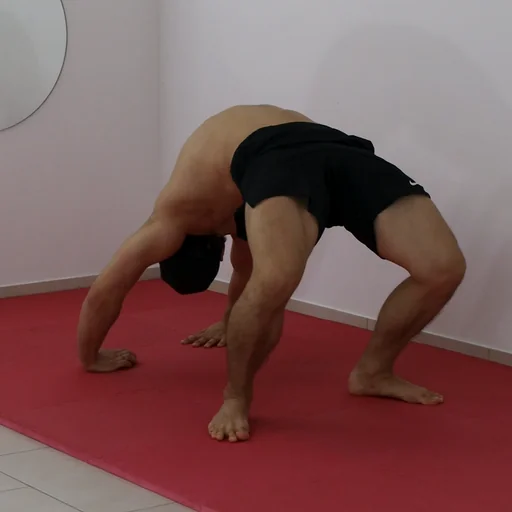
Bridge Rotations
The bridge rotation combines the classic bridge with a dynamic rotational movement to enhance both flexibility and strength throughout the upper body. This exercise intensely engages the back muscles, shoulders, and core. Unlike the static bridge, the rotation allows for active stretching and mobilization of the spine, improving coordination. The bridge rotation can be seen as a progression from the half bridge rotation, which serves as an easier entry point and helps train controlled movement execution.
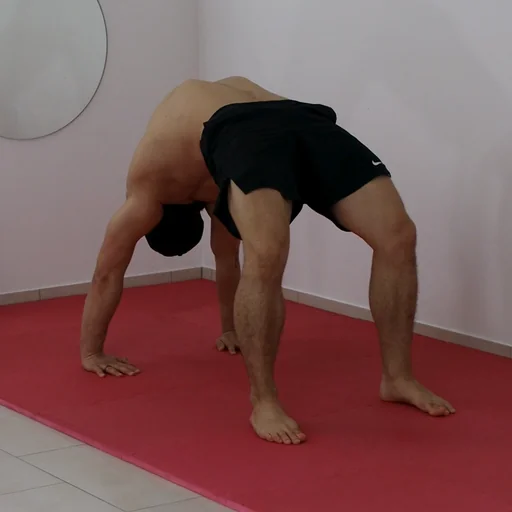
Bridge Hold
The bridge, also known as the wheel pose in yoga, is an intense backbend that stretches the front of the body and requires upper body strength. It is an excellent way to enhance the flexibility of your hips and spine. Although it is often considered a beginner exercise, it is complex and requires targeted training to avoid injuries.
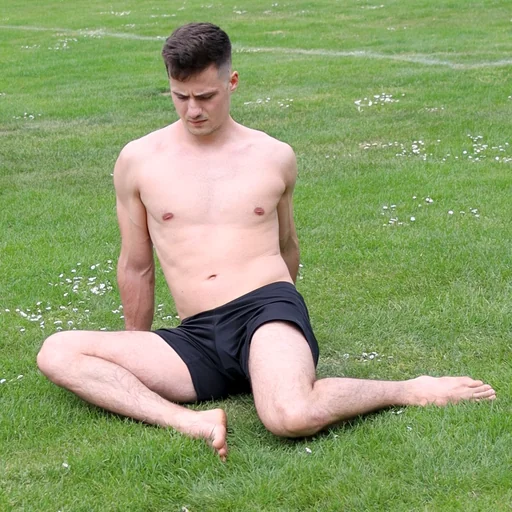
90 90 Stretch
This stretching exercise primarily targets your gluteal muscles and improves the mobility of your hips and knees. It is especially suitable for beginners in calisthenics and requires no additional equipment.