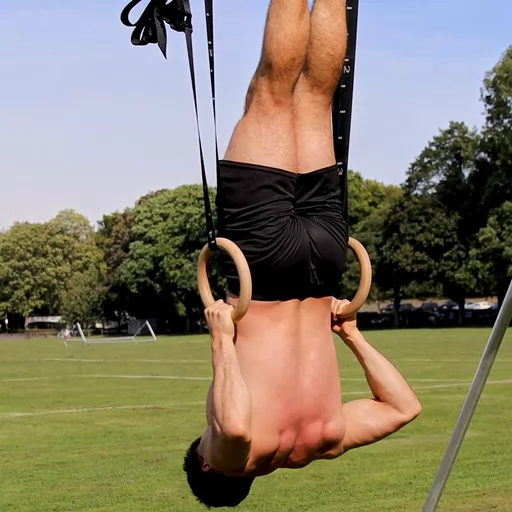
Upside Down Pull Ups with gym rings
Upside Down Pull Ups target the muscles in the upper back, neck, and biceps. They are often performed on gymnastic rings or a bar and require the body to hang upside down.
Although the exercise has Pull Up in its name, traditional pull-ups focus much more on the latissimus and less on the upper back and neck.
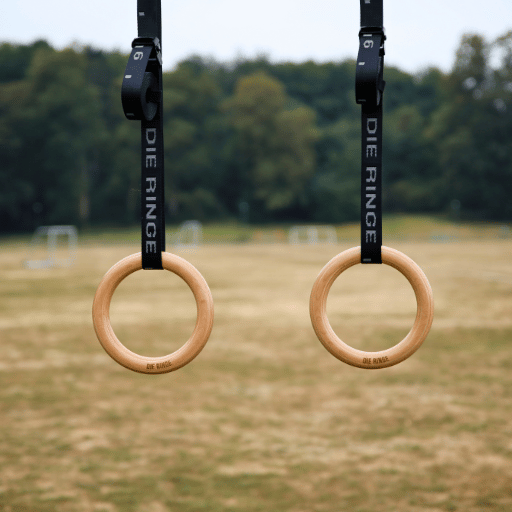
Necessary equipment
Upside Down Pull Ups with gym rings - the correct execution
- Start in the inverted hang position
- Pull the rings towards the chest
- Extend the arms slowly and in a controlled manner
- Work in the largest possible range of motion
Which muscles are trained by Upside Down Pull Ups?


Primary trained muscles for Upside Down Pull Ups
Upper Back - The muscles in the upper back, including the trapezius and rhomboid muscles, help move and stabilize your shoulders. They pull the shoulder blades together and support posture.
Biceps - The biceps brachii muscle is located on the front of your upper arm. It helps you bend your arm at the elbow, rotate your palm upwards, and lift your arm forward.
Neck - The neck muscles move your head in all directions and support important structures such as blood vessels and nerves that run between your head and chest.
Build strength for your pull-ups.
Working toward your first pull-up or more controlled reps? The DIE RINGE app shows you which exercise to train next and adapts your training to your level and equipment.
Train with DIE RINGEOver 1000 five-star reviews on App Store and Google Play.


Similar exercises to Upside Down Pull Ups
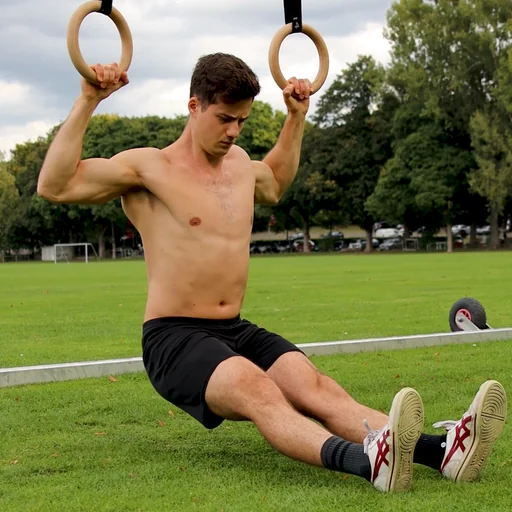
Hinge Rows with gym rings
Hinge Rows are a challenging exercise that specifically strengthens the upper back, shoulders, and arms. They enhance the strength of the trapezius muscles, activate the lats, and promote shoulder blade stability. Using gymnastic rings or TRX straps set at hip height, the body is kept in a straight line. During the pull, the hips are slightly pushed back until the torso is upright, and the elbows are aligned with the shoulders. The movement remains controlled, with deliberate retraction of the shoulder blades. Hinge Rows are ideal for building strength for Pull-Ups and Rows, effectively targeting the back muscles.
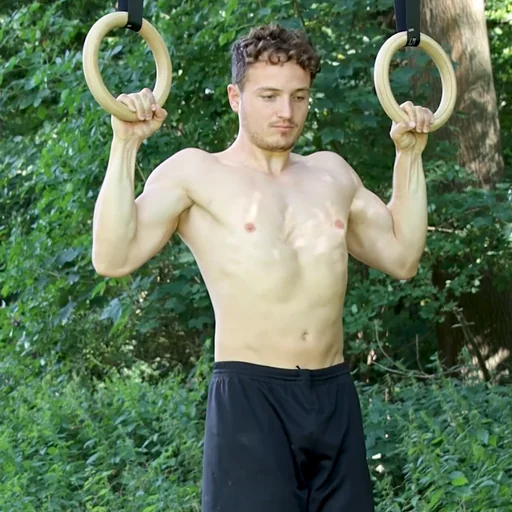
Bulgarian Pull Ups with gym rings
The Bulgarian Pull-Up is an advanced variation of the classic Pull-Up that particularly strengthens the shoulder girdle and improves upper body stability. Unlike the regular pull-up, the arms are pulled outward rather than kept close to the body, requiring additional control and specifically targeting the shoulders, trapezius, back muscles, as well as the biceps and forearms. This exercise is performed on gymnastics rings and provides an intense stimulus for the entire back.
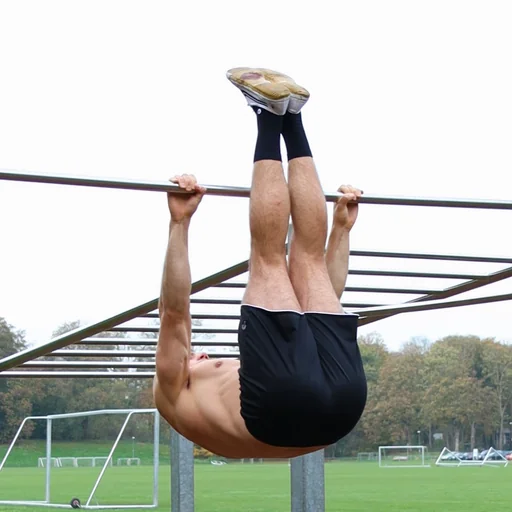
Reverse Deadlift, Inverted Deadlift
The Inverted Deadlift, also known as the Reverse Deadlift, is an effective exercise to improve body control, core stability, and strength. It serves as a foundation for advanced skills like the pullover or various Front Lever variations. In addition to the abdominal muscles, it specifically targets the latissimus and the long head of the triceps through retroversion of the upper arm.